
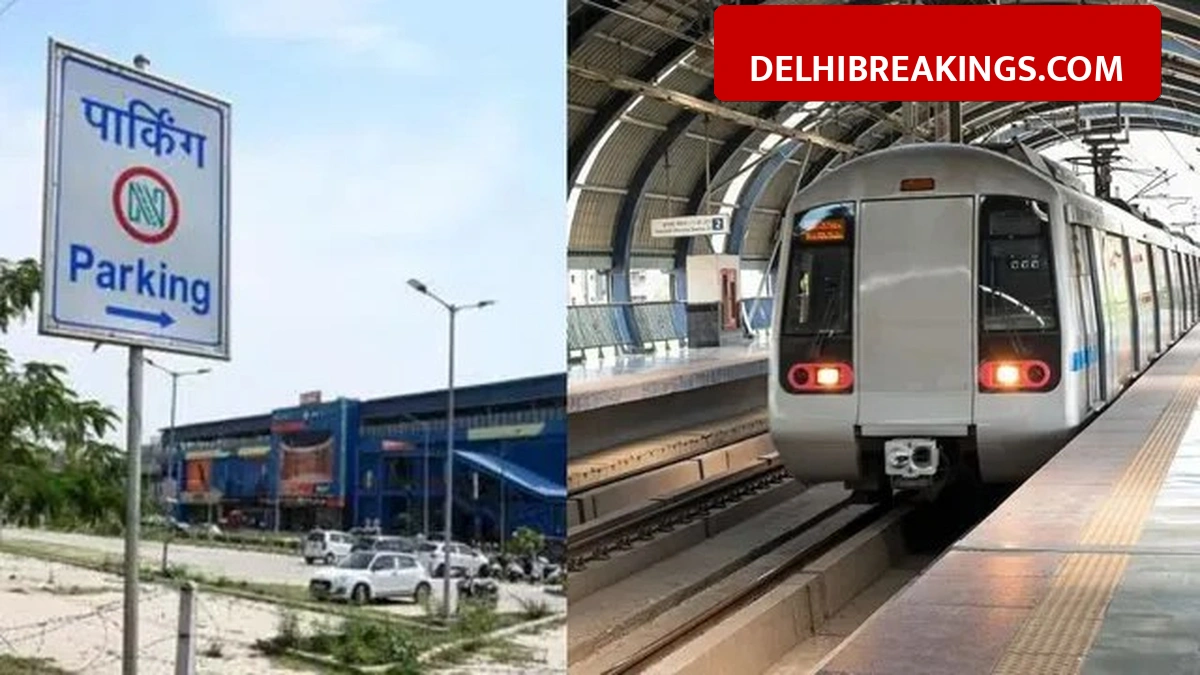
The Delhi government has issued strict instructions to the Delhi Metro Rail Corporation (DMRC) regarding parking facilities at metro stations. In a move to improve last-mile connectivity for commuters, the government has directed that parking facilities must be provided at all upcoming metro stations. This decision aims to encourage people to park their private vehicles at stations and use public transport, thereby helping reduce pollution in the capital.
What is the new rule for DMRC parking?
According to the latest directive, DMRC must ensure that a parking area is developed at every new station being built. The government has clearly stated that a shortage of space cannot be a reason to deny this facility to passengers. If there is a space crunch at any specific station, DMRC is instructed to develop a smaller parking lot, but it cannot be skipped entirely. Previously, DMRC used to build parking only at stations where ample land was available.
Will parking fees increase during high pollution?
In a major relief for daily commuters, Delhi Metro parking charges will not increase even when pollution levels are high. The Delhi government recently notified that parking fees across the city would be doubled when GRAP Stage-3 and Stage-4 restrictions are in place to control pollution. However, DMRC parking sites have been given a special exemption from this hike. This means passengers can park their vehicles at normal rates even during peak pollution season.
Check Current Delhi Metro Parking Rates
The standard parking charges for Delhi Metro stations remain affordable to encourage public transport usage. Following is the rate list for different vehicles:
| Vehicle Type | Duration | Rate (₹) |
|---|---|---|
| Car / SUV | Up to 6 Hours | 30 |
| Up to 12 Hours | 50 | |
| Monthly Pass | 1,200 | |
| Two-Wheeler | Up to 6 Hours | 15 |
| Up to 12 Hours | 25 | |
| Monthly Pass | 600 | |
| Cycle | Up to 6 Hours | 5 |
Commuters should note that night charges apply separately if vehicles are parked overnight.