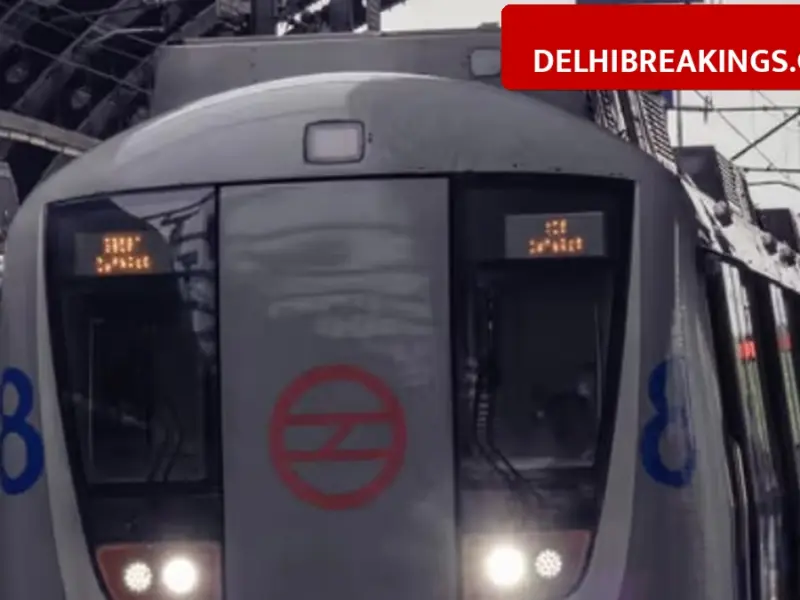


If you have ever dreaded the long, traffic-choked commute between Gurugram, Ghaziabad, and Greater Noida, here is some news that will sound like music to your ears. Surajpur in Greater Noida is gearing up to become a massive transit hub. According to recent developments, a new Namo Bharat train junction will be constructed here, effectively tying together two major rapid rail corridors and changing the face of daily commuting in the National Capital Region (NCR).
The Grand Plan: Connecting Ghaziabad to Jewar Airport
The first major arm of this project is a 72.4 km corridor designed to link Ghaziabad directly to the upcoming Noida International Airport. Starting from Siddharth Vihar in Ghaziabad, this route is a mix of speed and accessibility. It isn’t just a train ride; it is a meticulously planned network featuring 22 stations. Out of these, 11 will serve the high-speed Namo Bharat trains, while the other 11 are designated for metro services.
For residents in Greater Noida West, this is a game-changer. The train will zip through busy hubs including Char Murti (Greater Noida West), Knowledge Park-5, and Alpha-1, before heading toward the Yamuna Expressway sectors and concluding at the airport. With the Detailed Project Report (DPR) already discussed between the UP government and the NCRTC, the track is set to be mostly elevated, ensuring it stays above the city traffic chaos.
Closing the Loop: The Gurugram-Faridabad Link
What makes the Surajpur junction truly special is its role in connecting Haryana to Uttar Pradesh. A second corridor, proposed by the Haryana government, aims to bring commuters from Gurugram and Faridabad directly into this network. Imagine travelling from Gurugram to Greater Noida in just about 38 minutes—that is the target this project aims to hit.
This line will touch key areas such as:
- Iffco Chowk and Sector-54 in Gurugram
- Bata Chowk and Sector-85/86 in Faridabad
- Sector-142 and Surajpur in Noida/Greater Noida
By integrating this line at the Surajpur junction, authorities are effectively creating a circular “rail ring” around the NCR. This means a passenger could theoretically board in Gurugram, switch at Surajpur, and head straight to the Noida International Airport or Ghaziabad without ever needing to rely on road transport.
Timeline, Costs, and Integration
This massive infrastructure upgrade comes with a hefty price tag and a clear deadline. The Ghaziabad-Airport corridor alone is estimated to cost over ₹20,000 crore, while the Gurugram-Faridabad segment adds another ₹15,745 crore to the bill. While the financial sharing models are being finalized, the construction targets are ambitious, with a vision to have the full network operational by 2031.
Furthermore, the project promises smart integration to save costs and space. For instance, the Aqua Metro extension from Sector-51 will share infrastructure with the Namo Bharat line from Char Murti onwards. With initial trains planned to have six coaches and a capacity of nearly 2,000 passengers, the reliance on private cars is expected to drop significantly, clearing up the NCR’s infamous smog and congestion.
Last Updated: 17 January 2026